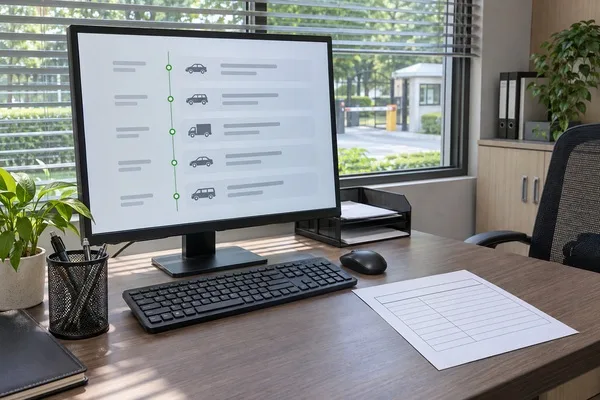
If you want reliable security information after a break-in, a gate log is a useful resource but is only as good as the quality of the entries. Gated community visitor tracking gives you that quality, with time-stamped digital records that show who entered, when, and who approved the visit.
Entrance IQ helps community managers replace paper logs and memory with records they can actually search. If you are sorting through a recent incident, reach out to our team or call (561) 503-4500.
What Should a Useful Gate Record Include?
A useful record answers four questions: when the visitor arrived, what vehicle they drove, who authorized the visit, and which guard was working. If any one of those is missing, the record leaves a gap someone will have to fill with guesswork.
Paper logs struggle with all four. Handwriting is hard to read, times get rounded or skipped, and plate numbers are copied wrong when a line of cars is waiting. A week later, the guard who wrote the entry may not remember the visitor at all.
Digital visitor logs fix most of that. Entries and exits are tracked with timestamps, vehicle information, and host details, so the resident who approved the guest is part of the record. When plate recognition is in place, registered vehicles are identified at the gate and unregistered plates are flagged for more verification.
The guard on duty matters too. Shift logs capture the actions taken during each shift, which helps you see who handled a given entry. Our gated community security approach is built around every visitor being logged and verified before entry.
How Does Incident Reporting Tie Into the Gate Record?
Incident reporting puts the details of what happened in the same system as the visitor records. Instead of a note on a clipboard, staff file a digital report with the date, time, people involved, and how the incident was resolved.
That connection is what makes an investigation faster. When a resident reports a missing package or damage to a car, you can look at the incident report and the gate activity for the same window side by side. You are no longer matching a sticky note to a logbook page.
EIQ Reporter uses customizable templates so reports stay consistent from one guard to the next. Administrators can sort incidents into categories and generate summaries, and reports can be shared with the right stakeholders.
Guards can also log incidents in real time with photos, notes, timestamps, and categories, and management can view those reports as they are filed. A photo of a damaged gate arm or an unfamiliar vehicle captured the moment it happened is far more useful than a description written at the end of a shift.
How Do Searchable Reports Help Boards Respond?
Searchable records let you answer questions quickly and accurately. When a board member, a resident, or a police officer asks who came through the gate, you can pull the entries for that time instead of paging through binders.
Residents want to know their manager is on top of things. Being able to say what the record shows, rather than what someone thinks they remember, builds trust after a stressful event. It also keeps rumors from filling the silence.
When law enforcement asks for information, organized digital records make it easier to provide what they need. Incident reports are kept as consistent, audit-ready records for internal tracking or outside review, which helps the community respond in a clear, professional way.
Boards also benefit from the bigger picture. EIQ Insight turns community data into charts and summaries on guest access, traffic, and historical trends. Looking at patterns over time helps a board decide where to focus, without overreacting to a single event.
How Should Visitor Data Be Handled Responsibly?
Visitor records include names, vehicles, and resident details, so they should be protected. A responsible system encrypts the data, limits who can access it, and keeps it available when it is needed.
Entrance IQ encrypts visitor data and keeps it access controlled, and the platform is geographically redundant, so records are not tied to a single location. We also publish a privacy policy so communities can see how information is handled.
Managers should set their own rules as well. Decide who on staff can view records, who can share them, and how requests from residents or outside agencies are approved. Clear internal steps protect residents and protect the association.
Good records will not stop every problem, but they give you facts when you need them most. That is the difference between hoping you know what happened and being able to show it.
Want to see how records are searched after an incident? Call (561) 503-4500 or book a live walkthrough with Entrance IQ for a demo of gated community visitor tracking.